Andre Fleet
A Man in FullAndre Fleet is a Black activist and candidate for mayor of Atlanta whose campaign makes racial representation both a source of political power and a point of vulnerability. He calls for a first Black mayor and urges his supporters to form a political team, while the novel places his candidacy inside a citywide system of cash-based voter mobilization and racial bargaining. His contest with Wes Jordan ultimately turns on a conflict over the Fareek Fanon case: Fleet’s major backer expects him to attack Fanon, but Fleet remains largely silent, loses that support, and is defeated by less than one percentage point.
Identity and Political Position
Fleet enters the political story initially through other people’s judgments. Inman Armholster asks Charlie Croker whether Fleet is too young and brash and too quick to invoke race. Charlie recognizes that the conversation concerns Fleet but cannot follow its details; he dislikes being drawn into Atlanta politics and recalls having had his own dealings with Fleet, though those dealings are not specified. The brief exchange establishes Fleet as a controversial figure with a prior connection to Croker, not the nature or outcome of that connection.
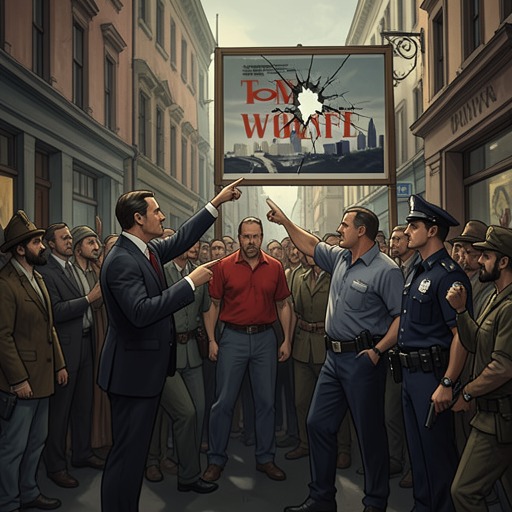
Fleet’s public identity is more clearly defined through his campaign. At a rally for Operation Higher, he presents the existing city administration as insufficiently representative of Black residents and describes its officials as accommodating white interests. He argues that Atlanta should elect its first Black mayor and announces his intention to run in November. He also frames his candidacy as the creation of a team that Black residents have needed. The language makes representation a collective political project, while Fleet’s attacks on the administration cast the election as a contest over who speaks for the city’s Black population.
Campaign, Organization, and Money
Fleet’s campaign is connected to the practical mechanics of municipal elections. Wes Jordan tells Roger White that Inman Armholster is guaranteeing Fleet one million dollars for get-out-the-vote work. In Jordan’s account, citywide campaigns depend on neighborhood organizers who claim they can deliver votes, and candidates may be pressed to pay them in cash through intermediaries. Jordan describes these payments as difficult to control once delivered and says that a candidate should have at least half a million dollars reserved for voter mobilization; a million, he estimates, improves the odds of winning by 50 percent. These are Jordan’s claims about the campaign system, not proof of particular payments made by Fleet. They nevertheless show how heavily Fleet’s prospects are understood to depend on a wealthy sponsor and an organized operation beyond the candidate himself.
Jordan also uses a metaphor of Atlanta as a small Black political core wrapped in a much larger white population. In his account, the votes of 280,000 Black residents in South Atlanta control the city itself, while three million white residents in North Atlanta and surrounding counties form the larger population around them. He presents the city’s political arrangements as a way for these groups to deal with that imbalance. Fleet’s appeal to a Black political team, and the importance Jordan assigns to the South Atlanta vote, therefore belong to a larger argument about representation, coalition, and the distribution of political power.
Rally and Racial Appeal
At Fleet’s Operation Higher rally, Reverend Isaac Blakey gives the candidate an emphatic public endorsement, presenting him as a continuing ally rather than a speaker present for one occasion alone. The audience answers with a repeated chant of support that grows from scattered calls into a unified response. The scene gives Fleet a crowd capable of turning his campaign slogan into a collective declaration, and it demonstrates the emotional force of the organizing around him.
Fleet’s speech connects that enthusiasm to criticism of the city’s leadership. He says that Black residents encounter officials who seem to serve white people while failing to represent them, then calls for Atlanta’s first Black mayor. His proposed team and his use of the city’s Black Mecca identity make the campaign about more than Fleet’s individual advancement: he presents it as a means of redirecting political representation toward the people he claims the administration has neglected. Jordan’s account of Fleet’s attacks on him adds another dimension. Fleet reportedly labels Jordan an establishment figure aligned with the white Chamber of Commerce and questions his authenticity as a Black leader. Jordan says Fleet depicts him as a beige half brother. The exchange shows Fleet making class, racial identity, and political independence instruments of electoral argument, although the accusations reach the reader through Jordan’s description of them.
Operation Higher and Cherokee County
Fleet is also associated with a racial protest in Cherokee County. Martha Croker later recalls reading that he was organizing an Operation Higher rally against an unspecified issue. She says she does not know whether Charlie directed him toward the county, only that Charlie may have pointed him there and that Fleet might have been looking for a place to demonstrate. Her account preserves uncertainty about what Fleet knew or intended.
The later revelation of Charlie’s scheme gives the protest a second, sharply different significance. Fleet leads Black demonstrators carrying placards through Canton, the county seat, while Darwell Scruggs and a group of youths shout racist abuse. Television crews arrive from around the country, and a network talk show broadcasts from the town’s main street. The spectacle stains Cherokee County’s public reputation; meanwhile, close-ups of property transfer documents reveal that Charlie has assembled land there for about $200,000, one-twentieth of what it would have cost before the protest and its publicity. The demonstration thus becomes part of a real-estate maneuver that exploits the racial conflict it appears to confront. The evidence establishes Fleet’s role at the head of the march, but does not establish that he knew Charlie was using the event to depress land prices.
The Fanon Controversy and Electoral Defeat
Fleet’s dependence on Inman Armholster becomes decisive during the dispute over Fareek Fanon. Inman is furious about the allegation that Fanon raped his daughter, Elizabeth Armholster, and has been telling people at Georgia Tech that Fanon committed the assault. Jordan reminds Roger that Inman is also the person financing Fleet’s voter mobilization. That connection makes Fleet’s response to the case politically consequential: Inman expects him to attack Fanon, but Fleet remains practically silent.
Jordan explains the silence as an electoral calculation. He says Fleet cannot publicly support Elizabeth in the way Jordan supports Fanon’s fairness, rights, and just treatment without risking too much of the South Atlanta vote on which Fleet is relying. In Jordan’s framing, the distinction is between deciding guilt or innocence and defending fairness and individual rights. When Croker turns against Fanon, Jordan’s public position allows him to present himself as a defender of a Black man against unfair treatment. Fleet, by contrast, is caught between Inman’s expectation that he condemn Fanon and the electoral cost Jordan says that condemnation would carry. Jordan says Inman becomes so angry that he cuts off Fleet’s get-out-the-vote money. Fleet is left without the funding he had been counting on, and Jordan describes him as having nothing with which to buy votes.
The final tally confirms the narrowness of the contest but not the ease of the result. After a sleepless election night, Jordan learns that he has defeated Fleet by less than one percentage point. Fleet’s loss follows the withdrawal of the money Jordan identifies as essential to his campaign, though the text does not reduce the entire result to that single cause. His defeat crystallizes the limits of a campaign built on both racial representation and a sponsor’s resources: the rhetoric can gather a crowd, but the coalition and financing behind it remain exposed to competing demands.
Narrative Role
Fleet links several strands of the novel’s account of Atlanta politics. His rally shows political identity being made through public speech and collective response; the Cherokee County march shows how a demonstration against racism can be entangled with a land scheme; and the Fanon controversy reveals the strain between a candidate’s public racial appeal and the private expectations of a major donor. Across these episodes, Fleet is neither simply a symbol of Black political possibility nor merely an instrument of another person’s plan. He is a candidate whose choices and constraints are presented through competing accounts, especially Jordan’s politically self-conscious explanation of why Fleet stayed silent. His narrow defeat leaves that tension unresolved: the campaign’s promise of a representative political team confronts the material dependence and fractured alliances of the election itself.